 Features
•
20 October 2026
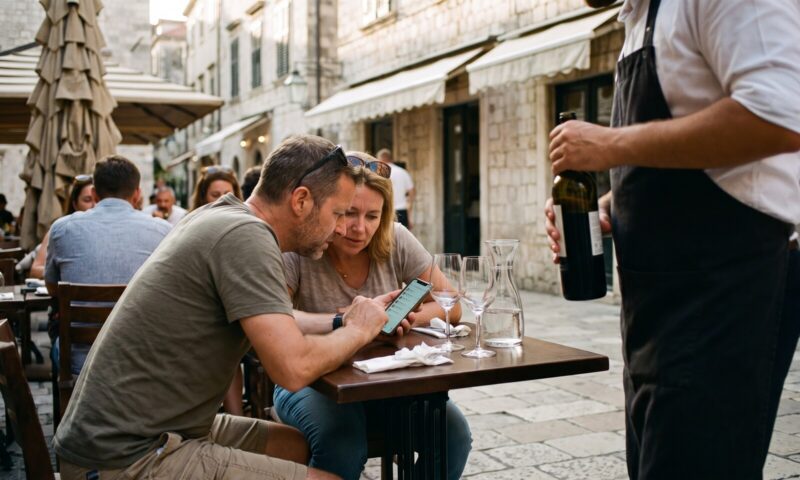
Does a multilingual wine list make a difference in a tourist restaurant? Yes, and the change shows up less in compliments than in what gets ordered. A foreign guest who can't read your wine list doesn't leave. They pick the cheapest bottle, or the first name they recognize, and your list stops working at the very table where it had the most to prove.
Picture a table of four visitors, none of whom reads French. They open the list, look for a landmark, and find it in the price column. A rosé at twenty-eight euros. Nobody asked for advice.
The wine chosen this way isn't necessarily a bad one. It is chosen by default, and in a restaurant the default choice almost always pulls toward the bottom of the list. The bottles you selected for their story, the white from a small estate, the red from an appellation nobody knows outside its own region, only sell with an explanation. Without a common language, the explanation never arrives.
A list that is readable in the guest's language doesn't replace advice. It lets them ask the right question, or skip the need for it.
When you want an English list for the summer, the temptation is to run everything through an online translator on a Sunday night. The result gives itself away quickly. An appellation of origin becomes an administrative phrase, "gouleyant" becomes a word that exists in no language, and the cuvée name gets translated word for word, which amuses a Dutch guest without helping them choose.
On a wine list, there are in fact three families of words. They don't call for the same treatment.
The middle family is the longest. It is also the most tedious to keep up to date by hand, language by language, every time a wine comes in or goes out.
We often hear that the team speaks English. That is true in many houses, and it is valuable.
In high season, though, the time spent on wine at each table is counted in seconds. A server who translates the list out loud no longer advises, they read. And they read in the language they master best after their own, which leaves out the German family at table six and the Danish couple seated near the door.
A list that is already readable shifts the work. The guest arrives with an idea, or with two hesitations. The server settles it in a few words. That exchange is short, and it sells better than a reading.
Wine by the glass benefits even more. The decision is made quickly there, and the margin is won or lost on a few well-placed wines. We have detailed how to price wine by the glass, but a fair price isn't worth much if the guest doesn't understand what they are ordering.
The Winevizer wine list is displayed in eight languages: French, English, Dutch, German, Spanish, Italian, Hungarian and Danish.
The first six are the ones you'd expect. The last two are more surprising in a Belgian tool, and they say something about how languages arrive. A language isn't added to the list of a single venue. It is added to the whole reference vocabulary, for all lists at once: every color, every wine style, every serving size.
You don't have to turn them all on. A list in eight languages in a neighborhood bistro with no foreign clientele brings nothing more than a list in two.
In the list settings, you tick the languages you want to offer. Only those are offered to the guest.
You also choose the language that opens by default. For a seaside address that mostly welcomes Dutch families in July, nothing stops you from changing this setting for the season and switching back to French at All Saints' Day.
The list link also accepts the language as a parameter. A QR code can therefore open the English version directly, and another one the German version, if you prefer separate table stands rather than a single one for everyone.
For each wine, whatever comes from the reference data follows the chosen language: the country, the region, the appellation, the style, the serving size labels, and the tasting notes when they exist in that language. The welcome note, on the other hand, is written language by language, and you are the one who writes it.
The printable version is also generated in the requested language. Handy if you keep a paper list on the terrace, for those windy days when nobody wants to take out their phone.
Not with the eight languages. With your bookings.
Go back over the bookings and bills of a high-season month. Nationality can be guessed from names and phone prefixes, and some booking platforms state it directly. In general, two or three languages stand clearly apart from the rest.
Then test the list the way a guest would see it. Open it on a phone, in the language you added, choose a glass while pretending you know nothing about the region, and note where you hesitate. If there is a snag, chances are it lies in your own text.
One last point, easily forgotten. A multilingual menu for tourists is only worth as much as its upkeep. The flawless translation of a wine that has been sold out for three weeks wastes more time on the floor than a list left in French. Keeping the list and the cellar together is the whole point of our cellar inventory guide.
A digital wine list settles the most thankless question, that of updating every language. You change a price or remove a wine once, and every version follows. The reference vocabulary is already translated. All that is left for you to write is what belongs to you.
Winevizer lets you create your wine list for free so you can try it on your own wines before deciding anything.
If your list is still to be built, our complete guide to the restaurant wine list covers its structure and the mandatory mentions, before the question of languages even comes up.
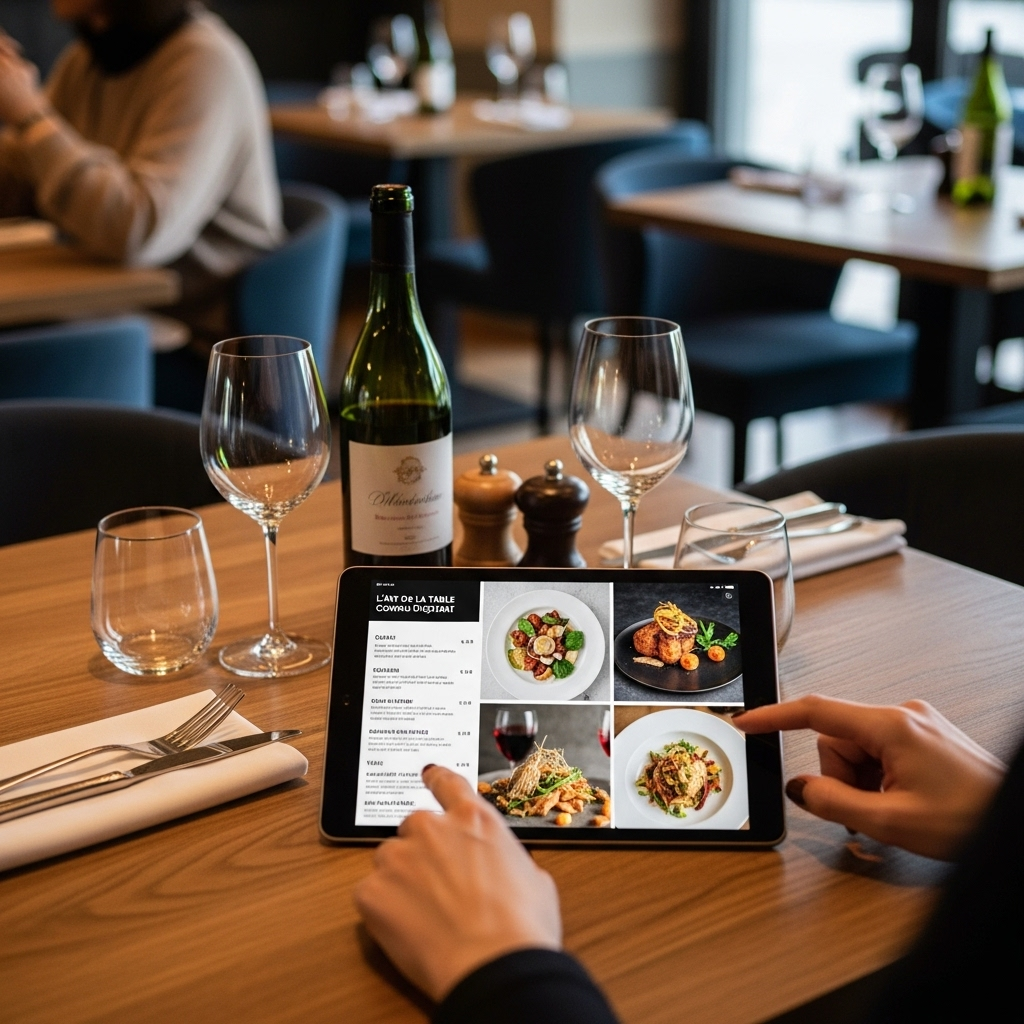
Are you thinking of deploying tablets in your restaurant? Discover how to choose the equipment, structure your menu (and your digital wine list), manage costs, and maximize ROI without degrading the in-room experience.<\/p>

Showing allergens on a restaurant wine list: sulfites, the serving size and the exact appellation, and how to keep them up to date.
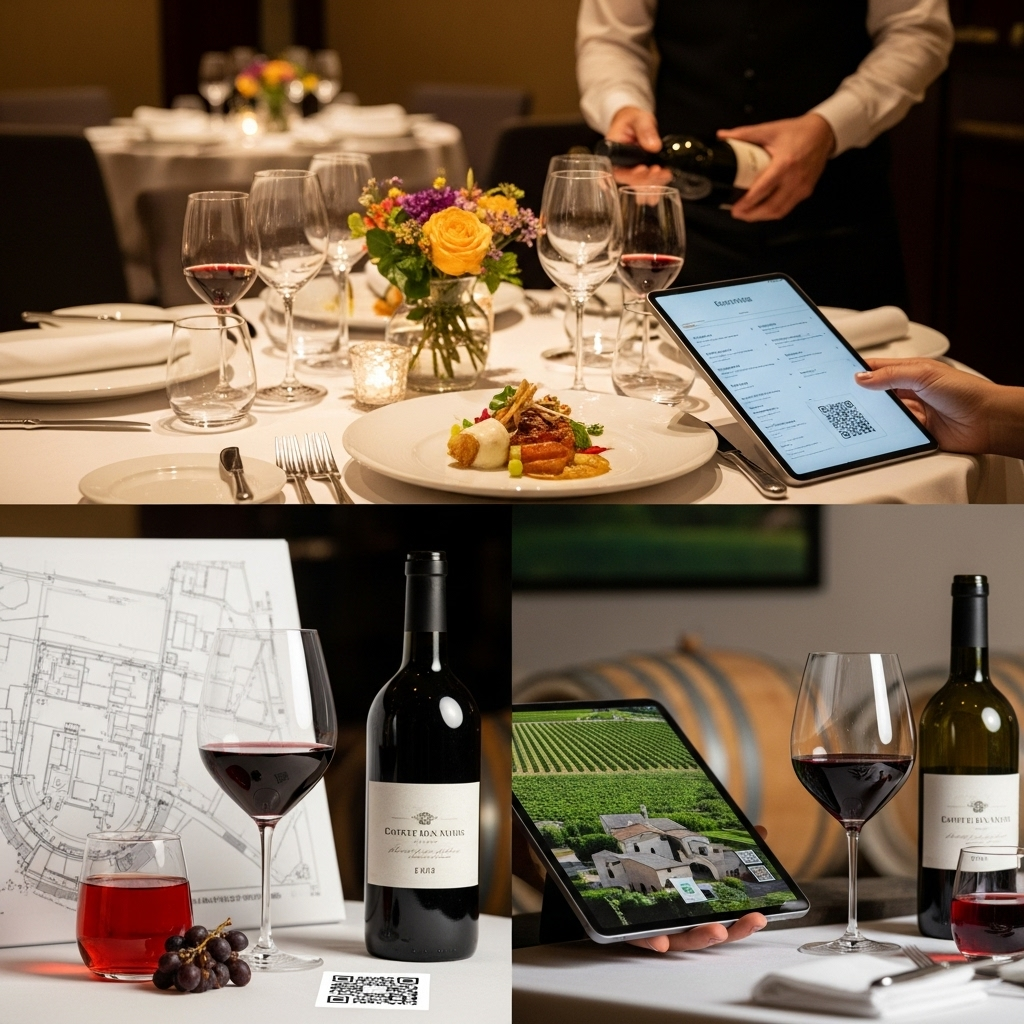
Need a clearer, more profitable, and easy-to-update restaurant wine list? Discover a concrete method, examples of structure, pricing tips, and the advantages of digital (QR code, tablet, virtual sommelier) with Winevizer.<\/p>
For 1 month with no commitment