
 Features
•
20 October 2026
Showing allergens on a restaurant wine list takes one line of text, and yet it is the mention that is missing most often. It isn't missing through carelessness. It is missing because it lives on the producer's label, not in the file you copied from to put your list together.
Three mandatory mentions of a wine list are in this situation: the allergen, the serving size and the exact appellation. They have in common that guests can check them, and that they are the first things looked at when someone comes to ask a question.
Wine doesn't carry the long list of allergens of a kitchen menu. It carries essentially one, sulfites, as soon as they exceed the regulatory threshold. More rarely, there are also milk and egg derivatives used for fining, when the producer declares them.
The practical rule is simple. If the bottle's label carries the mention, your list must be able to carry it too. A guest who asks "is there any sulfite in this?" isn't testing your knowledge. They have a reason to ask, and they expect an answer in three seconds, not a round trip to the cellar.
One distinction is worth keeping, because your guests keep it. No added sulfites doesn't mean no sulfites. Fermentation produces them naturally, in small quantities, in every wine. A natural wine claims the absence of additions, not the total absence. Writing "sulfite-free" outright on your list is a promise the bottle doesn't keep, and the person who asked you is precisely the one who knows it.
It is also a commercial matter. The demand has stopped being marginal, and it often comes from a whole table waiting for the answer before ordering. A venue that can answer right away sells a bottle its neighbor doesn't, and sells it by the glass as well as by the bottle.
This is where lists fall short, and by a wide margin.
"Glass of white, 6 euros" says nothing. Six euros for twelve centiliters and six euros for seventeen are not the same offer, and the guest has no way to tell. The serving size has to appear, ideally in centiliters, next to the price. The legal volumes of a glass in a restaurant are not set at a single value: it is displaying them that is required, not making them uniform.
The reflex that fixes the problem fits in one sentence. Stop naming a serving "glass". Name it "12 cl glass", or whatever size you actually pour. The word alone informs nobody and deprives you of the only element that makes your price comparable, and therefore defensible.
The same logic applies at the top end of the list. A magnum, a jeroboam or a Jura clavelin of 62 centiliters are formats that sell well when they are named, and that sit idle when the list leaves guests to guess. We have detailed elsewhere how to price wine by the glass, and none of that method works if the serving size isn't displayed.
The pitcher and the carafe deserve their own line on a restaurant list. They are the classic blind spot. They are served, they are billed, and the list mentions them nowhere. A 25 centiliter pitcher announced as such gets ordered; the same pitcher with no mention becomes a discussion on the floor, and a discussion on the floor is time you don't bill.
Finally, check that your displayed price is indeed the net price, service included. It is the third mention that always goes with the other two, and the one whose omission turns into a dispute at the bill rather than a question when ordering.
The appellation of origin on a wine list is the third checkpoint, and the most visible one. "Burgundy" is not an appellation, it is a region. Between a generic Burgundy and a Gevrey-Chambertin premier cru, the price gap is considerable, and the list must make it readable.
Writing out the full designation under which the wine is sold is not a formality. It is what justifies your price to a guest who knows, and what reassures the one who doesn't. A shortened appellation does the opposite of both.
The appellation level itself deserves to be readable. A PDO (AOP), a PGI (IGP) and a vin de France don't tell the same story, aren't controlled the same way, and don't allow the same mentions on the label. A vin de France can't claim a named vineyard plot; a PGI can name its grape variety where some PDOs do not. Mixing these levels in a single section, without saying so, blurs the reading at the precise moment the guest compares two neighboring lines. We covered this classification in detail in a dedicated article on the levels of PDO, PGI and vin de France.
Separate the appellations distinctly in your layout. A guest looking for a landmark finds it, and one who is exploring understands what they are paying for. The subject ties in with how you keep your cellar, which we cover in the inventory guide: a correct appellation on the list assumes a correct appellation in stock.
They move. That is the whole problem.
The vintage changes, the producer changes their fining, you go from a 12 to a 15 centiliter glass because you changed supplier. Each time, a printed list becomes wrong, and a list that is wrong on a regulatory mention is worse than an incomplete one.
The math is quick. Reprinting costs money, so you wait, and while you wait the list lies. Striking it out with a pen solves the service problem and destroys the impression of seriousness the list was supposed to give.
This is exactly what the digital list shifts. At Winevizer, the serving size is a field of the price line, not a piece of text to retype: more than a hundred serving sizes are available, some of them created by venues for their own formats. Displaying sulfites is a venue setting, and each wine carries its own no-added-sulfites marker. The serving size names are translated into the languages of the list, so a Dutch-speaking guest reads "Glas" and an English speaker "Glass" without you having to do anything.
Three steps, in this order. One evening is enough, even in a restaurant running at full tilt.
Start with your wines by the glass. They carry both the risk and the margin. Check that each line shows a numeric serving size, and replace any serving simply named "glass".
Then go through the appellations. Compare your list to your purchase orders, not to your memory. The gaps cluster on the wines you have sold for a long time, the ones nobody rereads anymore.
Finish with the sulfites. Your natural wines and your bottles with no added sulfites are the ones people ask you about on the floor. Mark them once, and the question stops coming back.
If you want to try on your own wines before deciding anything, the free digital wine list lets you build a first version and see what these three mentions look like once in place.
The complete structure of a list, the examples and the pricing trade-offs are gathered in our guide to the restaurant wine list. The three mentions covered here are its regulatory foundation: they don't sell on their own, but their absence is noticed, and it is noticed by the guests who ask questions, that is, by those who were about to buy.

Multilingual wine list for a tourist restaurant: what gets translated, what stays in French, and how to choose among the eight languages.
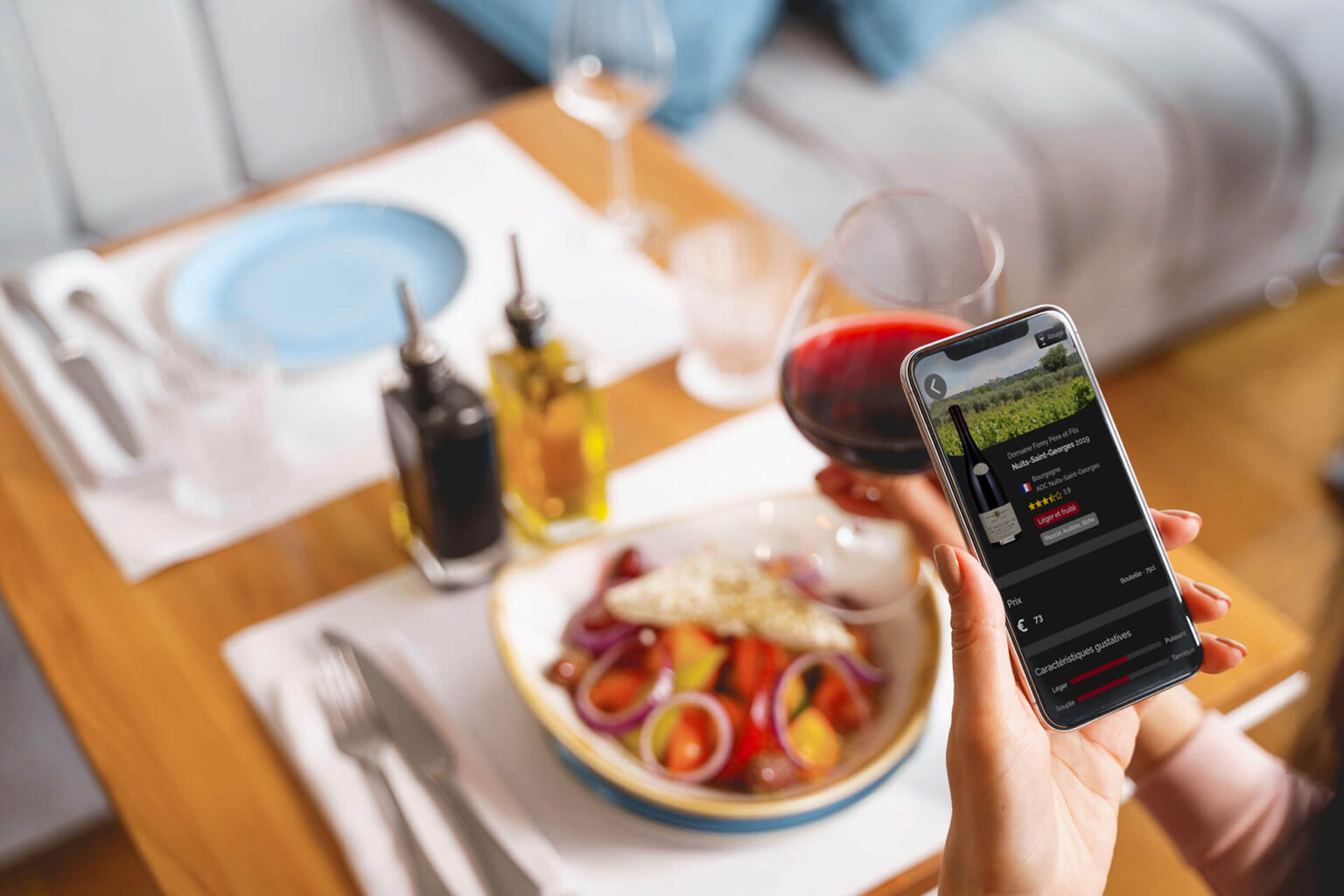
This Monday, March 21, 2022, and after more than a year of development and discussions with restaurateurs and sommeliers, we are calling on Mons restaurateurs who would like to digitize their wine list.<\/p>

Pairing stuffed squid with wine Stuffed squid is a true culinary marvel that evokes the Mediterranean. Naturally, the experience is enhanced when one knows how to choose the right wine to accompany it. But which pairings should be favored to maximize the chances of success? Here are some valuable tips to find the perfect harmony between the […]<\/p>
For 1 month with no commitment