 Features
•
10 September 2026
Features
•
10 September 2026
A wine runs out at 8.30pm. The list still offers it at nine, at half past nine, and until close. In between, three guests have ordered it and three times someone has come back to apologise.
This is not a question of digital versus paper. It is the distance between where the information changes — the floor, mid-service — and where it can be corrected: the office, usually the next morning.
A correction that requires sitting down at a computer does not get made. It accumulates, and the list drifts.
On a tablet, the app opens a stock management screen covering the whole beverage list, not only the wine. Six categories: wines, wines by the glass, beer, spirits, soft drinks and food.
Each line shows what you need to decide: the colour at a glance, the name and vintage, the producer, the format, the price and the quantity in stock. Search at the top, and a filter to find the references you have switched off.
Adding a wine takes about thirty seconds. The add button, the name, the producer, the vintage, the format, the price, and it is on the list. No session to open on another device, no file to re-import.
Editing is just as quick: fix a price that has moved, switch off a reference that has run out, and it disappears from the list the guest is reading.
Adjusting stock happens without opening the record. A + and a − on every line: you open a bottle, you decrement, done. That mechanic is what makes inventory continuous rather than monthly, and it is the precondition for acting on dormant stock, which commonly ties up 12 to 18% of a cellar.
That is not a filing decision. A pour does not follow the same pricing logic as a bottle: it carries service loss, it has a shelf life once opened, and it typically returns 1.5 to 2 times the bottle margin at the same purchase cost.
Separating it in the interface lets you steer it as what it is — a list within the list, with its own decisions. The calculation methods are covered in our piece on pricing wine by the glass.
The same device sitting in the dining room shows the list to the guest and serves as a tool for the house.
Three taps on the logo, a PIN specific to the venue, and you switch between the two modes. A guest never lands in the settings, even looking for them.

We worked hard this summer to meet your requests to present your digital wine (and beverage) list to your customers on a tablet. Winevizer, your digital wine list, is now available in the IOS and Android app stores. The application can now be installed on tablets such as […]
A debate is gaining ground in the trade: wine sales are eroding while younger drinkers turn to beer, whose language and marketing feel more accessible. At the centre of the criticism sits the complexity of wine — varieties, appellations, vintages, jargon — which can lose a guest who is in a hurry or new to [...]
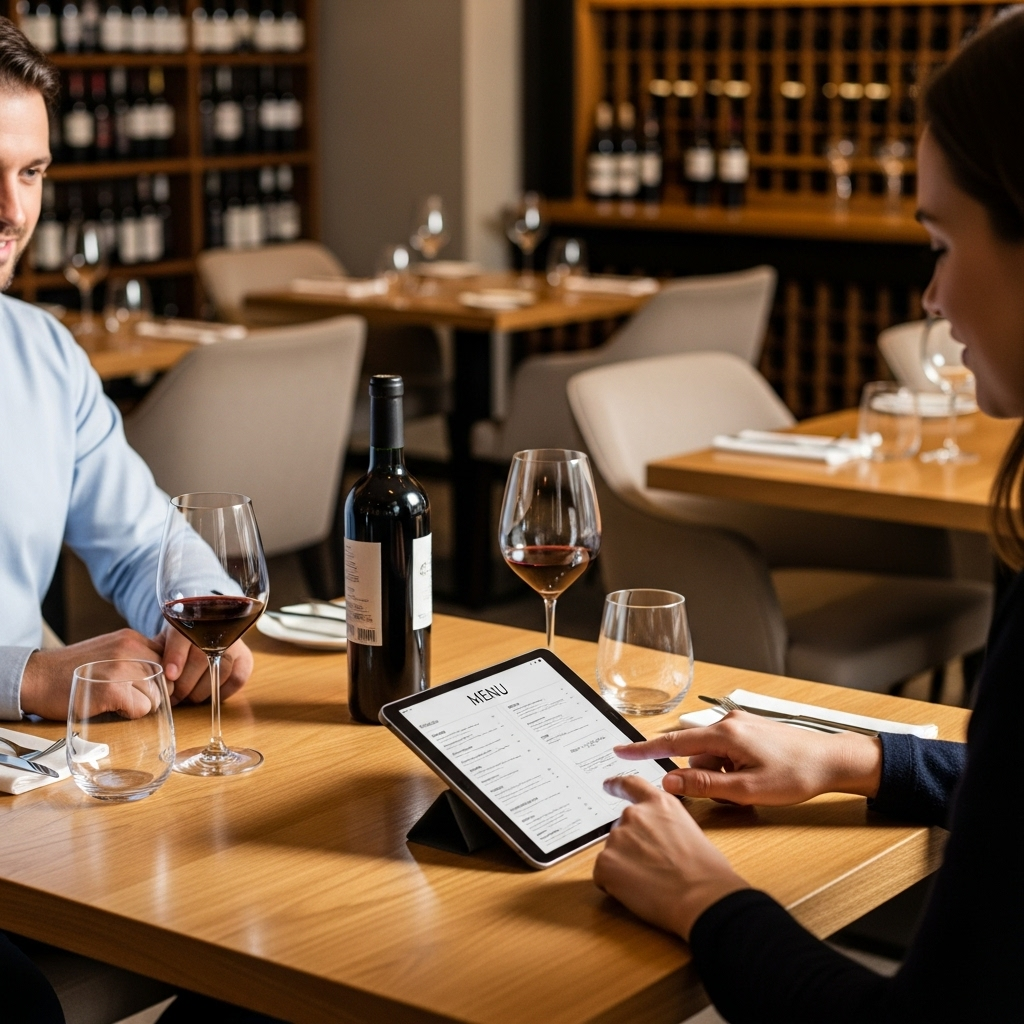
Are you looking to create a free online restaurant menu quickly and without a hitch? Here’s a clear guide with concrete options, step-by-step instructions, templates, and a focus on QR codes — with a professional alternative if you want to go further.<\/p>
For 1 month with no commitment