 Wine & restaurant
•
10 September 2026
Wine & restaurant
•
10 September 2026
Wine markup is the ratio between the price on your list and what you pay your distributor. It is the central call in your beverage program — too low and you lose the margin that pays for the cellar, too high and you lose the guests who read the list and order a beer. Here is the full method, how to set your own bands, and the traps that cost real money when you ignore them.
Two numbers describe the same decision, and confusing them is the most common error in the room.
They convert directly: cost percentage is one divided by the multiple. 3x is 33%, 3.5x is 29%, 4x is 25%, 5x is 20%. Pick one language and hold it across the whole program, because a team that hears both without the conversion will quietly price against two different targets.
Two further cautions before you set anything:
Published markup bands travel badly. What a guest accepts moves with the room, the neighbourhood, the city, and whether your market is used to seeing tax on the menu or added at the register. Rather than importing someone else's numbers, build your own in an afternoon:
What holds everywhere is the shape, not the numbers. Rooms with more service on the floor carry a higher multiple, because the guest is paying for the guidance as much as the bottle. Wine bars invert the picture entirely: bottles run thin, and the margin lives in the by-the-glass program.
Pick a target — say 3.5x — and apply it to everything. Simple, legible, and fair to a guest who never feels a price jump. The problem shows up above roughly $50 wholesale, where the list price becomes prohibitive and the bottle stops moving. Workable for a short list with no serious cellar.
Add a flat dollar figure — say $22 — to the cost rather than a multiple. A $6 wine lists at $28, an effective 4.7x. A $60 wine lists at $82, an effective 1.4x. This makes the top of your list reachable while protecting margin at the entry, and it is the dominant method in serious wine rooms.
Cut the cellar into cost bands and let the multiple fall as cost rises: 4x up to $18, 3.5x from $18 to $35, 3x from $35 to $70, 2.5x above that. A compromise between the legibility of method 1 and the fairness of method 2 at the top end, and the most common approach in mid-range rooms.
Set list prices on the round numbers your market expects, then work backwards to find the distributor whose cost lands where it needs to. More marketing than accounting — useful alongside a cost method to shape perception, dangerous on its own, because without a margin check you can list at a loss.
Mixing up the two numbers. A manager targeting "30%" and a sommelier targeting "3x" are aiming at 33% and 30% respectively, and the gap compounds across a hundred references. Write the target down in one language and convert once.
Pricing off the invoice instead of the landed cost. Your distributor's number is not your cost. Add delivery, which often runs 4 to 8% of the invoice; breakage in service, 1 to 2%; the carrying cost of inventory, 3 to 6% annualised on the value sitting in the cellar; and the loss on open bottles that never sold, which on a badly calibrated by-the-glass program can reach 5 to 10% of it. All-in cost typically runs 8 to 15% above what you were billed.
Applying one multiple to everything. The same multiple on a $5 bottle and an $80 bottle gives you $20, which sells, and $320, which does not — outside a very small number of rooms. You choke the top of your list while possibly giving away margin at the bottom.
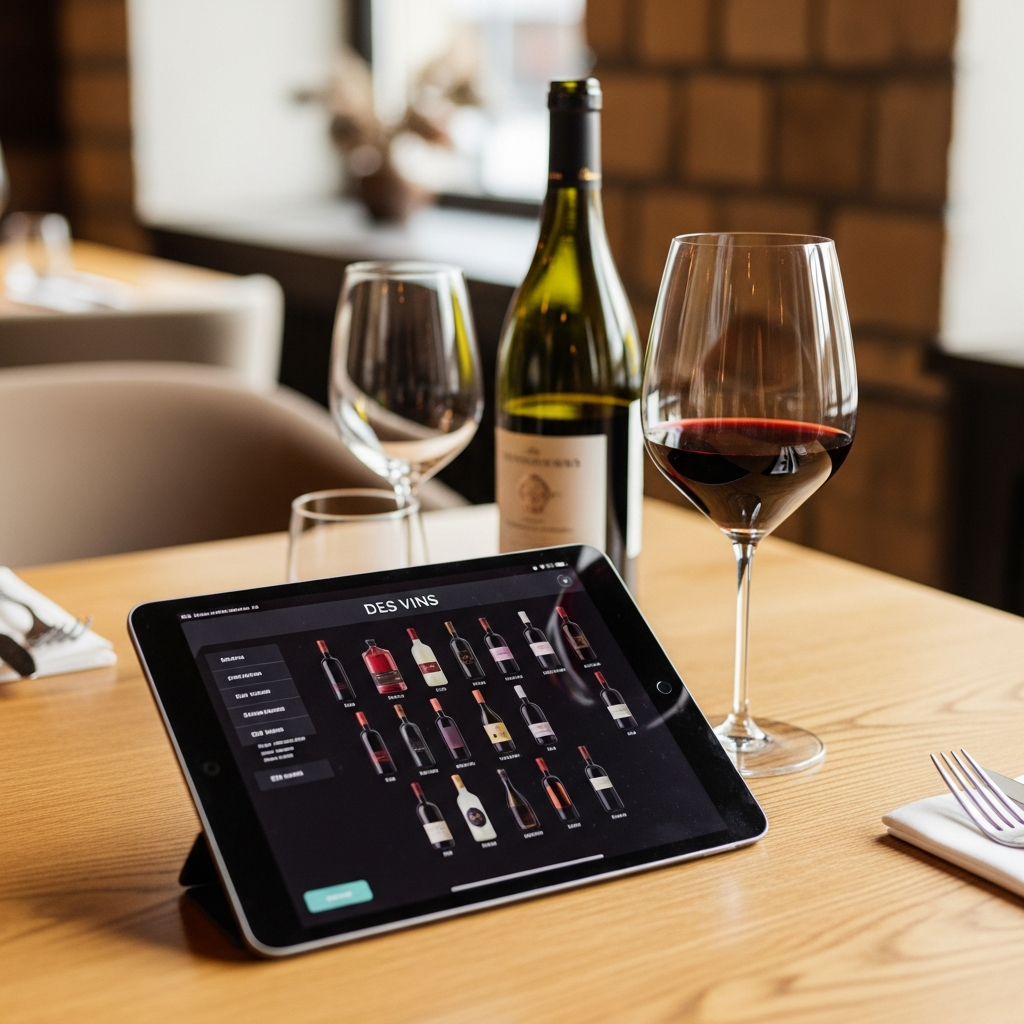
In the back office, every reference shows its purchase price, its list price, the resulting multiple and the dollar margin per bottle. You see at a glance which references sit outside the pattern of your own list — far below or far above it — and you fix them before the list goes live.
Crossed with consultation and sales data, you find the references underperforming because the price is wrong rather than the wine. A bottle drawing 200 views and no orders in a month is usually sitting above your guests' ceiling. Test it lower for two weeks and read the result, without touching the target for the list as a whole.
Internally, yes. A server with no visibility on margin does one of two things when a guest hesitates: steers to the cheapest bottle to be kind, or to the most recognisable label to be safe. Neither is a decision. Sharing the cost, multiple and margin matrix turns the floor into an active part of the program, pointing guests toward the references that combine good margin and good rotation.
To the guest, never. They are buying a wine and an evening, not a margin. Letting those numbers show breaks the thing they came for.
Bottle markup is only part of the picture. Overall cellar profitability also turns on your by-the-glass pricing, which is where the margin actually lives in most wine bars and bistros, and on clearing the dormant stock that ties up capital without producing anything.
Beverage margin is the most profitable line on most restaurant checks — commonly 65 to 75% gross on wine, 75 to 85% on soft drinks, 80% and above on cocktails and spirits. But that theoretical margin leaks through a hundred small holes: prices set wrong, references that never move, a by-the-glass program nobody steers, a [...]
Everything you need to know to successfully digitalize a restaurant, wine bar, or hotel: benefits, 90-day roadmap, tools, mistakes to avoid, and a focus on digital wine lists.<\/p>

The wine fair season is in full swing, it's the perfect opportunity for Winevizer to put its algorithm to work to try to uncover good deals and detail this offer a bit.<\/p>
For 1 month with no commitment