 Wine & restaurant
•
10 September 2026
Wine & restaurant
•
10 September 2026
How many wines should a restaurant list carry? There is no right number, and the number is not the right question. A list of two hundred wines, sixty of which never sell, is worth less than a list of forty that all turn. The only useful question is what share of your list is actually working.
Operators ask us regularly how many wines they should have. There is no answer. And in looking for that figure, they miss the question that actually decides whether a list is profitable: what proportion of your references are working for you.
Long lists are usually built by accumulation, one cuvée after another, with nobody ever taking anything off. Each addition looked harmless. The result is not.
So ask it differently. Not how many wines, but how many wines are ordered at least once a month.
Every line on your list ties up money in the cellar. That is the obvious cost. There are three others, less visible.
Here is the figure that counts, and nobody calculates it.
A trained server recommends about fifteen wines with conviction. That is what they retain, what they have tasted, what they can talk about. Beyond that they stop recommending. They start reading aloud.
This does not mean you should carry fifteen references. It means that past a certain size your list needs structure to stay usable: legible sections, a sort by style rather than by region alone, a filter or a virtual sommelier if the list is digital.
A well-structured list of a hundred and twenty navigates better than a disorganised list of sixty. Size is not the problem. The absence of a path through it is.
This distinction changes everything, and it is routinely forgotten.
Your by-the-glass selection has a physical ceiling. An open bottle degrades, so each glass reference has to turn fast enough not to be lost. That ceiling depends on your volume, not on your ambition.
Take a concrete case. An open bottle holds three days in good conditions, four with a preservation system. On a 750 ml bottle poured at 5 oz, you need to move five or six pours in three days to lose nothing — about two a day. A restaurant selling forty glasses a week can carry six or seven references by the glass. The same room offering twelve will pour half of them down the drain and never notice, because the loss disappears into food cost.
Do this calculation with your own numbers before adding a glass reference. It takes two minutes.
Your bottle list has no such constraint. An unopened bottle waits. It costs you tied-up capital, not outright loss. So the two halves of your list are sized separately.
Most operators size the list once and then let it live. That is a mistake.
Your volumes change with the season, your guests change with it, and what they ask for changes most of all. A restaurant with a terrace can double its by-the-glass service in summer while its bottle sales slow. The right number of references is not a number, it is a range that moves.
Two adjustments a year is enough. One before the high season, one after. Take out what has not turned, bring in what suits the season ahead, and hold the total roughly stable rather than letting the list grow at every pass.
No general rule will replace these three figures, and you can have all of them in an evening.
These three measure different things. A list can be short and badly covered, or long and turning perfectly. The number alone says nothing.
If your sales sit in a POS, the dormant share comes straight out of it. If not, an evening with six months of order sheets is enough to spot the references that never appear. The exercise is not pleasant. It is short, and it almost always surprises whoever does it for the first time, because we remember very poorly what we do not sell.
Taking a reference off is harder than putting one on. Nobody enjoys admitting a purchase was a mistake.
Work in small waves rather than one clear-out. Take off five dormant references, move them by the glass or as a suggestion, and watch what happens. Nobody asks for them.
A reference coming off has three possible destinations, and it is better to choose than to let it happen. By the glass, to clear it fast even at a thinner margin. As the suggestion of the day, if it deserves one last defence. Or to staff, which has the advantage of getting your team tasting and turns a loss into training.
And set yourself one rule before the next purchase: one in, one out. Most over-long lists did not get that way by choice, but by the absence of a rule.
A digital wine list lets you switch a reference off without deleting it. The decision becomes reversible, and therefore easier to take, and the history stays available if you want it back later. Stock adjusts straight from the tablet on the floor, at the moment the bottle is opened, which makes the dormant share measurable instead of estimated.

In 2022, digitization has become a priority for many sectors, and the restaurant industry is no exception. Here are several good reasons to create a digital version of your old paper wine list.

In the world of wine, a good wine list can make all the difference in the overall tasting experience. However, managing a traditional wine list can be tedious, costly, and often requires regular manual maintenance. That’s why more and more restaurants and bars are opting for digital wine lists. […]<\/p>
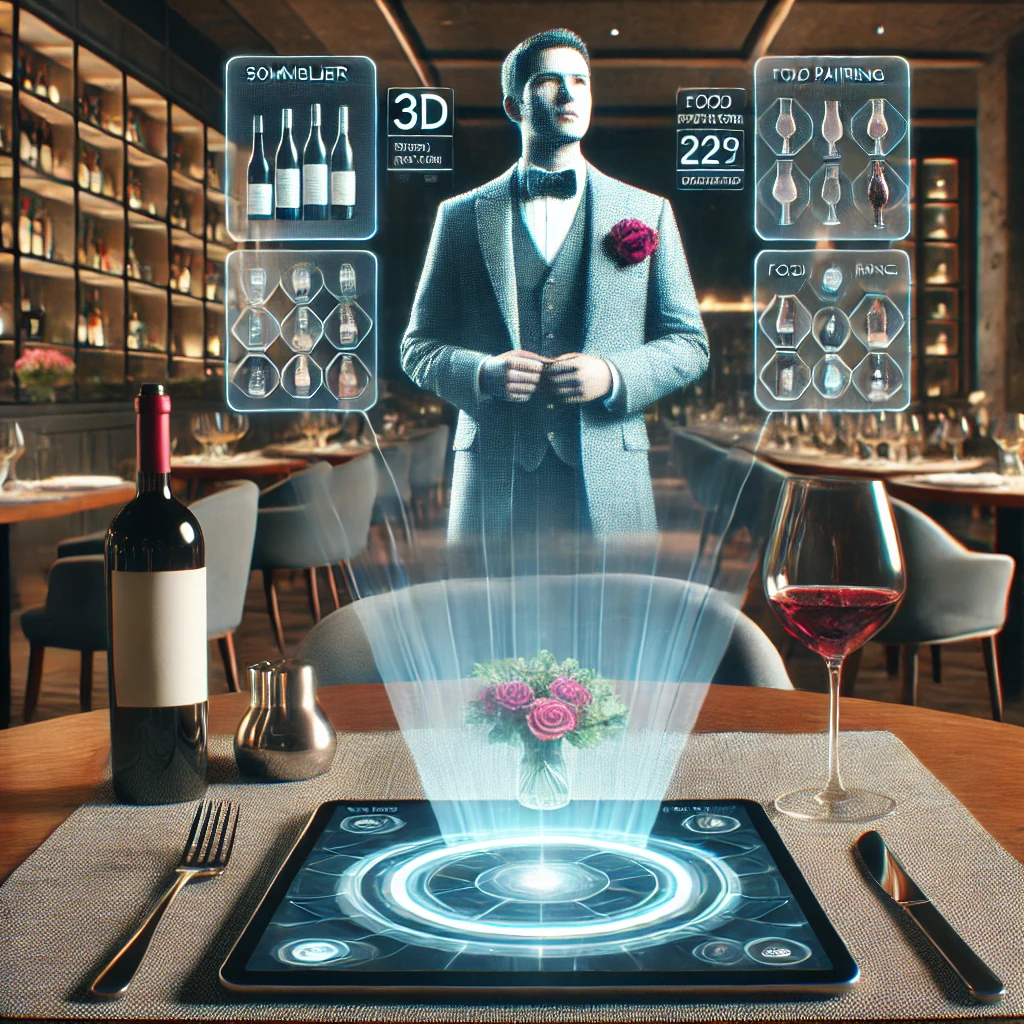
In the world of restaurants and bars, technological innovation is transforming the customer experience. Among these innovations, the virtual sommelier stands out as an essential tool to enrich your restaurant's wine list. But what exactly is a virtual sommelier? The virtual sommelier: definition A virtual sommelier is a digital solution that guides […]
For 1 month with no commitment